After Flood Cleaning Services
Available 24/7
After The Flood What Next?
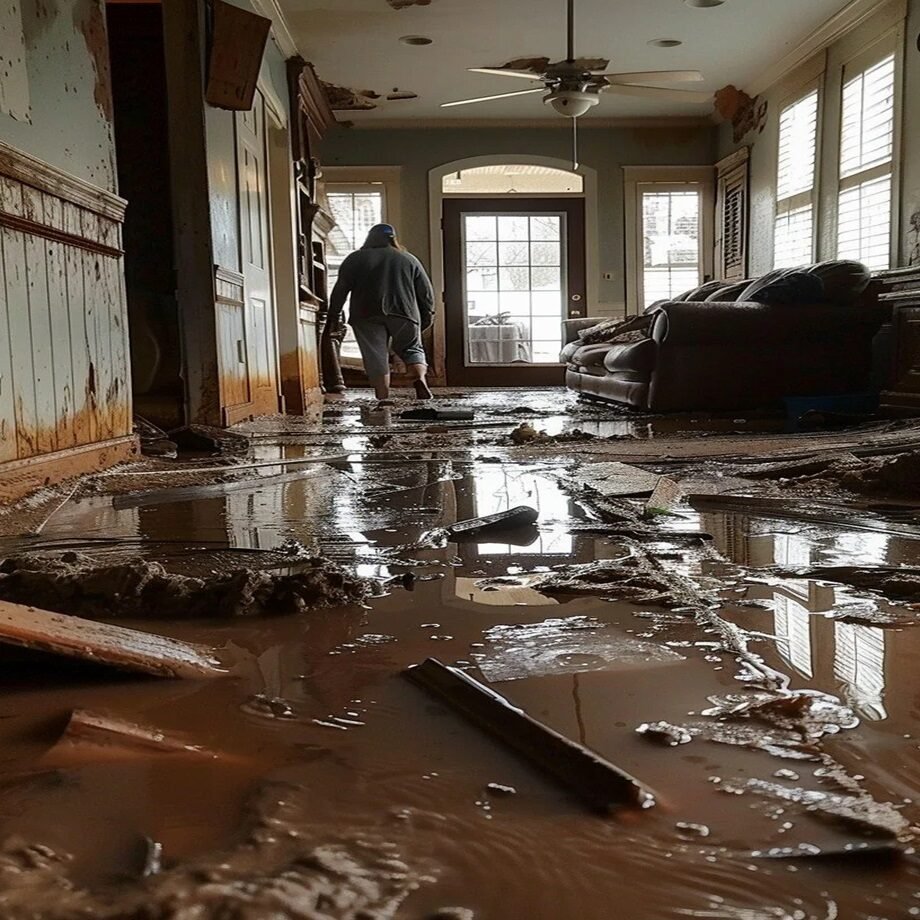
Floodwater whether from rivers, surface water, or drain surcharge is contaminated. It carries silt, sewage, chemicals, and bacteria, all of which remain on surfaces and inside materials after the visible water has receded.
Residual moisture soaks into walls and floors, contamination from drains and rivers settles onto every surface, and mould colonisation starts within 24 to 48 hours.
Emergency Cleaning 247 provides comprehensive after-flood cleaning across the London, 24 hours a day — from extraction and decontamination to structural drying.
When You Need This Service
• River, coastal, or surface-water flooding
• Flash flooding and storm ingress
• Drain and sewer surcharge during heavy rainfall
• Burst water mains affecting the property
• Basement and cellar flooding
• Commercial premises needing rapid return to trading
Book Our After Flood Cleaning Services in London
For after flood cleaning services anywhere in London, call Emergency Cleaning 247 immediately.
Every hour matters — call us now.
CALL: 0203 951 4864 — Available 24 hours, 7 days. Emergency response across all London boroughs.
EMAIL: info@emergencycleaning247.co.uk — For non-urgent water damage assessments only.
Emergency Response • Satisfied Customer Services • On-request Documentation • All 33 London Boroughs
Our Cleaning Process
Emergency Response — Any Hour, Any Borough
We respond to flood cleanup calls across London 24 hours a day. On arrival, we assess the source and category of water, the extent of affected areas, and the structural materials involved. We begin water extraction immediately — every minute of standing water increases absorption into flooring, walls, and structural elements.
Water Extraction
Professional water extraction equipment removes standing water from the property rapidly. We use truck-mounted and portable extraction units that remove water at rates far beyond what a domestic wet vacuum achieves. For Category 2 and Category 3 water, extraction is carried out in full PPE with immediate decontamination of all extraction equipment after use.
Assessment of Structural Moisture
Thermal imaging cameras and professional moisture meters are used to map moisture penetration throughout all structural elements — walls, floors, ceilings, and cavities. Water migrates beyond the visible wet area through capillary action and gravity — the full extent of moisture penetration is almost always significantly larger than what is visible. This assessment determines the drying plan and identifies materials requiring removal.
Contamination Treatment — Category Appropriate
For Category 2 and Category 3 water damage, all affected surfaces are treated with antimicrobial and biocidal agents appropriate to the contamination level. Category 3 flooding receives full BS EN 1276 biocidal treatment with appropriate dwell times. For Category 1 damage where mould has begun establishing, antifungal treatment is applied to all affected surfaces before drying commences.
Structural Drying
Commercial-grade desiccant dehumidifiers and high-volume air movers are deployed throughout the affected area. The drying plan is based on the moisture assessment — equipment is positioned to create optimal airflow through all affected structural elements. We monitor drying progress with daily moisture readings and adjust equipment placement as drying proceeds. The drying process continues until all structural elements return to pre-loss moisture levels — not simply until the surface feels dry.
Mould Treatment and Prevention
Where mould has established during the flood event or in the period before our attendance, specialist antifungal biocidal treatment is applied. Mould penetrating structural materials — particularly plasterboard and timber — may require removal of affected elements rather than surface treatment. We assess mould penetration depth and advise honestly on what can be treated versus what requires removal.
Material Removal and Disposal
Flooring, plasterboard, insulation, and other materials saturated with Category 2 or Category 3 water — or penetrated by mould beyond treatable levels — are removed and disposed of correctly. For Category 3 contaminated materials, disposal follows clinical waste regulations. All removal is documented photographically before the material leaves the property.
OUR WIDE COVERAGE
We cover all of London.
All 33 boroughs are covered.
All Postcodes.
We are a call away from you.
QUESTIONS FREQUENTLY ASKED
The water’s been gone for several days already – is it too late to call?
No, but please don’t wait any longer. Mould risk increases daily once conditions are right, and starting professional drying now still meaningfully reduces further damage and supports your claim.
Is floodwater dangerous even after it drains away?
Yes. Floodwater leaves contamination — bacteria, sewage residue, and chemicals — on every surface it touched. Decontamination before reoccupation is strongly recommended, particularly where children, older people, or anyone immunocompromised lives in the property.
Can I stay in the property during the work?
It depends on the extent of flooding. Single-room incidents often allow occupation; whole-floor flooding usually requires temporary alternative accommodation, which your insurer may cover. We advise honestly on arrival.
Do you prevent mould coming back?
Mould needs moisture. Verified structural drying plus antimicrobial treatment removes the conditions it requires.
Helpful Resources for Guidance
GOV.UK flood recovery guidance: gov.uk/prepare-for-flooding.
Environment Agency flood warnings:
check-for-flooding.service.gov.uk